
My Writing Journey
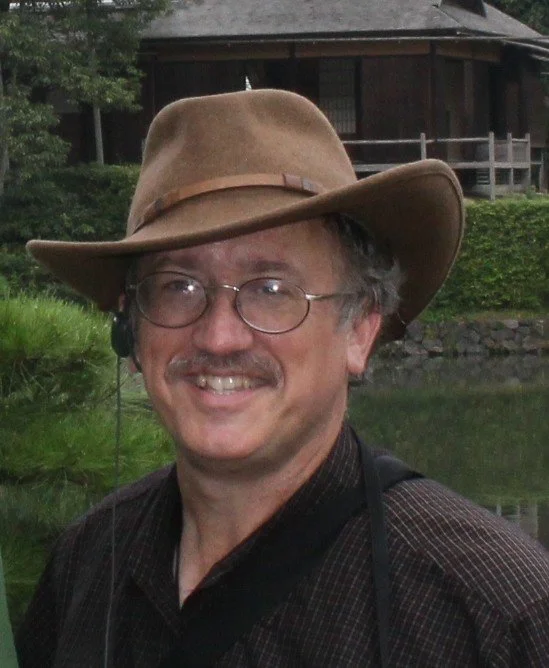
The writing bug bit me as a teenager. My mom showed me a copy of Smithsonian Magazine and encouraged me to write for them. I read our back issues and set that as a goal.
As a law student in Austin I wrote for Texas Monthly magazine, including a piece on the Pantex nuclear-weapons assembly plant and a cover story profiling the people who own the most land in Texas.
Later, while working as a stonemason in Missouri, I wondered how long that house would stand. That led me to pitch this idea to Smithsonian: Send me out to talk to engineers of three great American structures about how those monuments would fare if civilization collapsed. These were the World Trade Center towers, the Gateway Arch in St. Louis, and the Grand Coulee Dam in Washington. It was published as “Engineers vs. the Eons” in March 1984. To date I've written 54 more features and columns for Smithsonian and its sister publication, Air&Space/Smithsonian. I’ve also published in Invention&Technology, Aviation Week, Harvard, Science Digest, Popular Science, Audubon, The Boston Globe, New York Daily News, Mechanical Engineering, Engineering Times, National Board Bulletin, and Nature Conservancy.
My features were mostly on technology and history, and during the research phases I encountered many people with special insights on high-energy, complex machines. That led me to wonder: What lessons can we draw from catastrophic errors? My agent at William Morris pitched the idea to HarperBusiness, and that became Inviting Disaster. Shortly after that was published, Al Qaeda attacked New York and Washington, and HarperCollins asked for a chapter on the evacuation and collapse of the WTC towers.
During that research I became interested in why helicopters couldn't save anyone from the tower rooftops. What could the machines do, and what were the limits? How do they work? That led to a second nonfiction book, The God Machine, on the social history of helicopters, their inventors, and their pilots.
Those books led to dozens of lectures along with appearances on NPR, History Channel, National Geographic Channel, Coast to Coast AM, Science Channel, and NHK of Japan.
I still write features and columns, but after almost a half-century (!) of nonfiction, I wanted to try non-nonfiction. And I figured fiction could draw on my experiences. I'd worked in settings including construction, mining, and logging; lived in several states; traveled extensively; was familiar with all the research tools; and had spent thousands of hours preparing for and conducting interviews. Here’s a summary of particularly interesting places I’ve visited as a writer.
That background led me to write a suspense story set in DC and West Virginia, The Jacket. I'm about ready to release an SF novel, so stay tuned for that.